

Is laser for nail fungus really effective? Compared to light therapy
Nail fungus is one of the most common problems faced by both men and women. This infection not only spoils the appearance of the nails, but can also cause discomfort, unpleasant odor and reduce the quality of life. In recent years, new treatments have emerged - one of them is laser treatment of nail fungus, and the other is photodynamic therapy (red light/blue light therapy).
Dermatologists' offices offer lasers promises quick results, but is expensive. Is home nail fungus treatment devices Can it compete? Let's examine the science and practice.
How does a nail fungus laser work?
Laser therapy uses concentrated light energy that penetrates the nail and affects the fungal cells.
- Mechanism: the laser beam raises the temperature of the fungus, which kills it or stops its growth;
- Duration: the procedure usually lasts 20–30 minutes, several sessions are required;
- Advantage: does not harm healthy tissue;
- Scientific research: some studies show the effectiveness of 60-80 %, but long-term results are still being studied (e.g., Journal of the American Podiatric Medical Association, 2020).
Light therapy for nail fungus
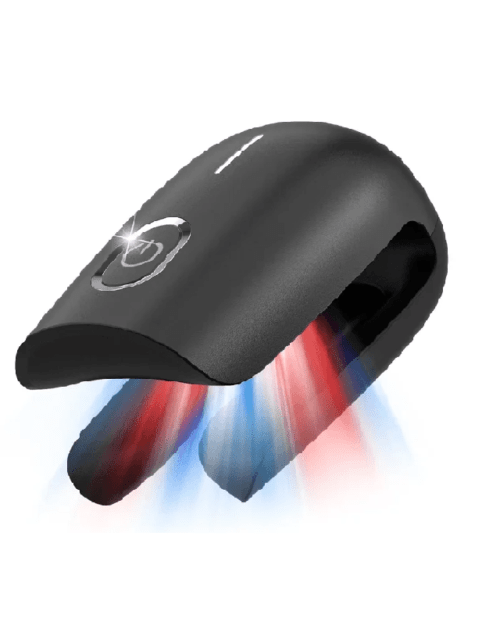
Light therapy usually uses red or blue light waves in combination with a photosensitizer (a special substance that is sensitive to light).
- Mechanism: light activates a photosensitizer, which destroys fungal cells by oxidation;
- Advantage: the procedure is painless, often cheaper than laser;
- Research: clinical data are still limited, but some show a positive effect, especially in superficial infections (Dermatologic Therapy, 2021).
Laser vs. light therapy: comparison
| Criterion | Laser | Light therapy |
|---|---|---|
| Mechanism of action | Heating the fungus | Oxidative effect with photosensitizer |
| Efficiency | 60–80 % (in some studies) | 40–70 % (limited studies) |
| Number of procedures | 3–6 generations | 6–10 times |
| Price | High | Medium/Lower |
| Security | Generally safe, but requires a specialist | Safe, minimal risk |
| Suitable | For deep, long-standing infections | For milder, superficial cases |
When to choose laser and when light therapy?
- Laser It is more suitable for advanced cases of fungus, where the nail is severely damaged. It is a good choice if other methods (creams, varnishes, tablets) do not help.
- Light therapy may be more effective in the initial stage or as an additional method in combination with topical medications.
Expert insight
Dermatologists emphasize that neither laser nor light therapy is a „magic pill.“ It is often necessary to combine it with:
- antifungal medications (topical or oral);
- proper nail hygiene;
- footwear disinfection.
Without these measures, the infection can quickly recur.
WitchRestore the look of healthy nails with KTS lasers
More than 10 million users trustworthy KTS Laser therapy is one of the most effective ways to treat nail fungus at home. Since 2001, the innovative brand has been offering FDA-approved technology, which is recommended by dermatologists as a safe and painless alternative to traditional treatment.
Why choose KTS?
- Deep impact: The laser destroys the root of the fungus under the nail plate.
- Scientifically based: effectiveness proven by clinical trials.
- Security: no chemical drugs or side effects.
We recommend KTS nail fungus therapy devices
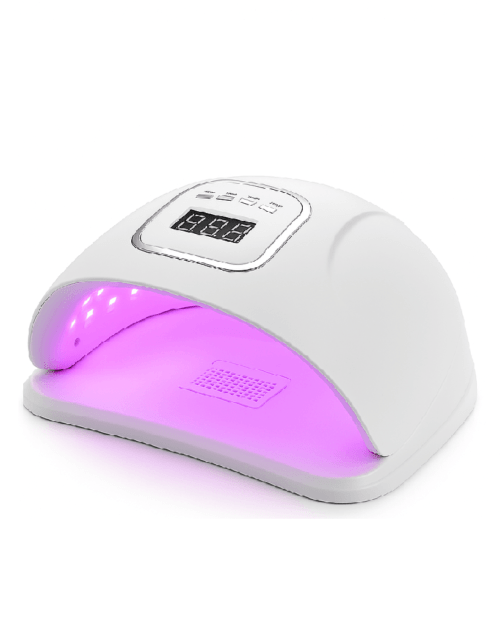
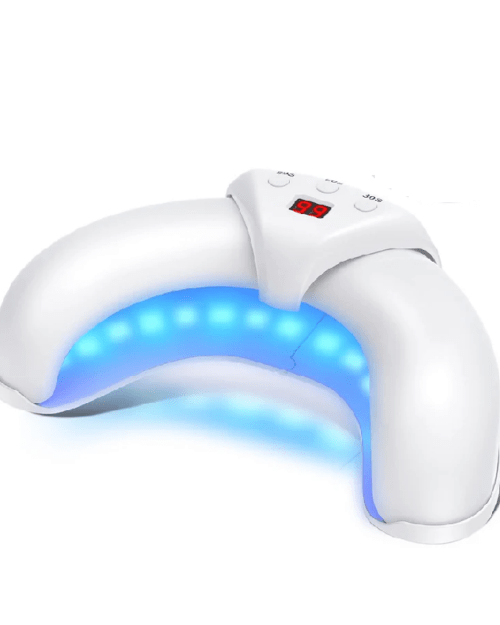
We offer certified KTS light therapy devices for purchase KTS in their official e-store. The manufacturer offersfree shipping worldwide.



Conclusion
Laser therapy currently has more scientific evidence than light therapy and may be more effective for severe cases of nail fungus. However, light therapy remains safe, cost-effective, and appropriate as an adjunct in the early stages. The optimal solution should be selected by a doctor after assessing the individual patient's situation.
👉 If you are interested in a broader context, read the article 5 common mistakes when treating nail fungus and how to avoid them.